Player guides
Mow, ted, bale: hay is coming
4 min read
Until now, hay was bought at the co-op. You can now make it yourself: sow a meadow, mow it, ted it, bale it, bring the bales in. Here is how it works.
A meadow lasts three years
The meadow is sown from Fields, like the other crops, in March, April, September or October. Count €90 of seed per hectare. It stays in place for three game years without being sown again, needs no spraying and does not wither.
The grass grows from March to November and stops in winter. The first cut is never ready before 1 May. Sown in spring, the meadow is therefore mown in May or June; sown in autumn, it waits for the following May.
Three cuts a year
A meadow gives about 9 tonnes of hay per hectare per year, in three cuts: 4.5 tonnes at the first, 2.5 at the second, 2 at the third. In the last year, each cut gives a little less, and the fertility of the field plays its part as for any crop.
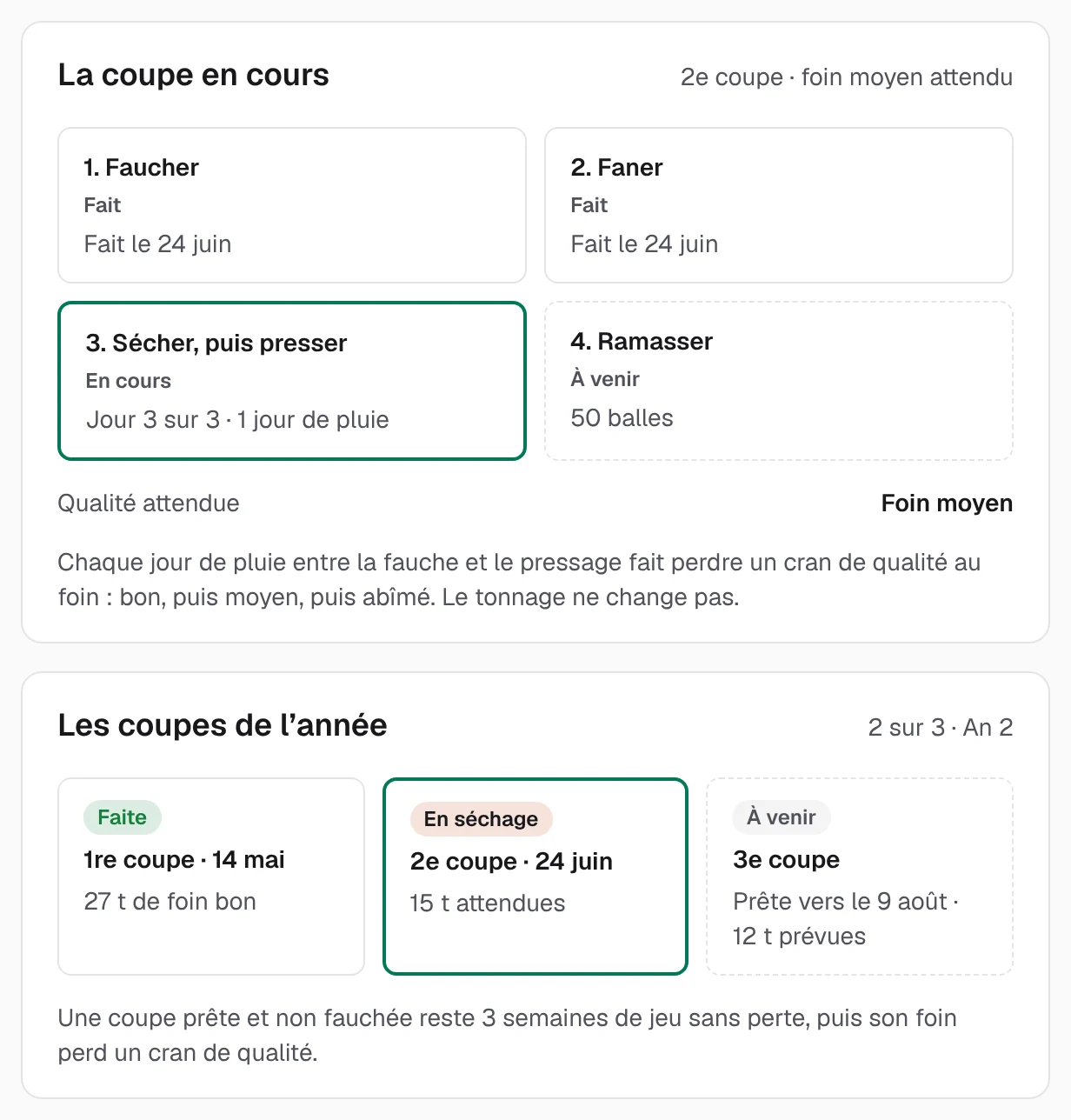
Between two cuts, the grass grows back in about six game weeks, more or less depending on the water in the soil. Ready grass left standing for more than three weeks ages, and its hay loses one grade of quality before it is even mown.
Mow, ted, let it dry
Before baling, a cut goes through three steps:
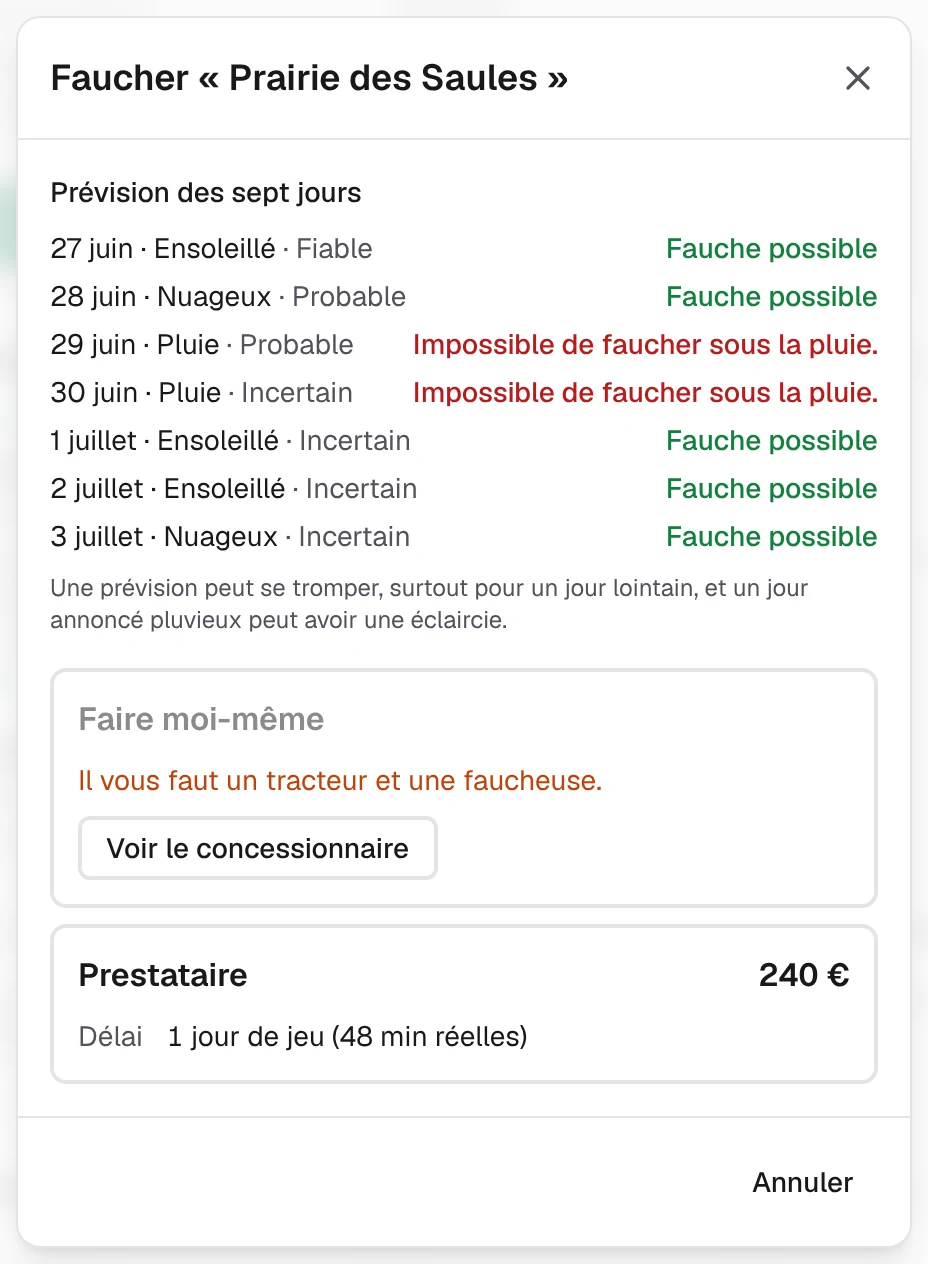
- Mow: the grass is laid on the ground. It takes a tractor and a mower, or the contractor, at €60 a hectare.
- Ted: the grass is turned over to dry. It takes a tedder, or the contractor, at €25 a hectare. Hay that has not been tedded cannot be baled.
- Dry: three game days from the mowing.
Rain changes everything. Each day of rain between the mowing and the baling takes the hay down one grade: good, average, then spoiled. And in the rain or in a storm, you can neither mow nor ted. So look at the forecast before you mow: the mowing window shows the seven days to come, and so does the Weather app. The part the weather plays on the whole farm is explained in The weather decides.
Bale and collect
Next, it is the same job as for the straw, described in From harvest to bale. Baling puts the hay into round bales and fixes the quality of the whole cut. Bale collection takes the bales off the field and puts them away in the fodder stock, each quality on its own. Through the contractor, baling hay costs €6 a bale and bale collection €5 a bale, a little less than for straw.
As soon as the last bale is in, the meadow starts growing again for the next cut.
Feed your cattle or sell
For the herd, filling the store takes the average hay first, then the good. Spoiled hay is never used to feed the animals. How to make up a ration is detailed in Livestock is coming.
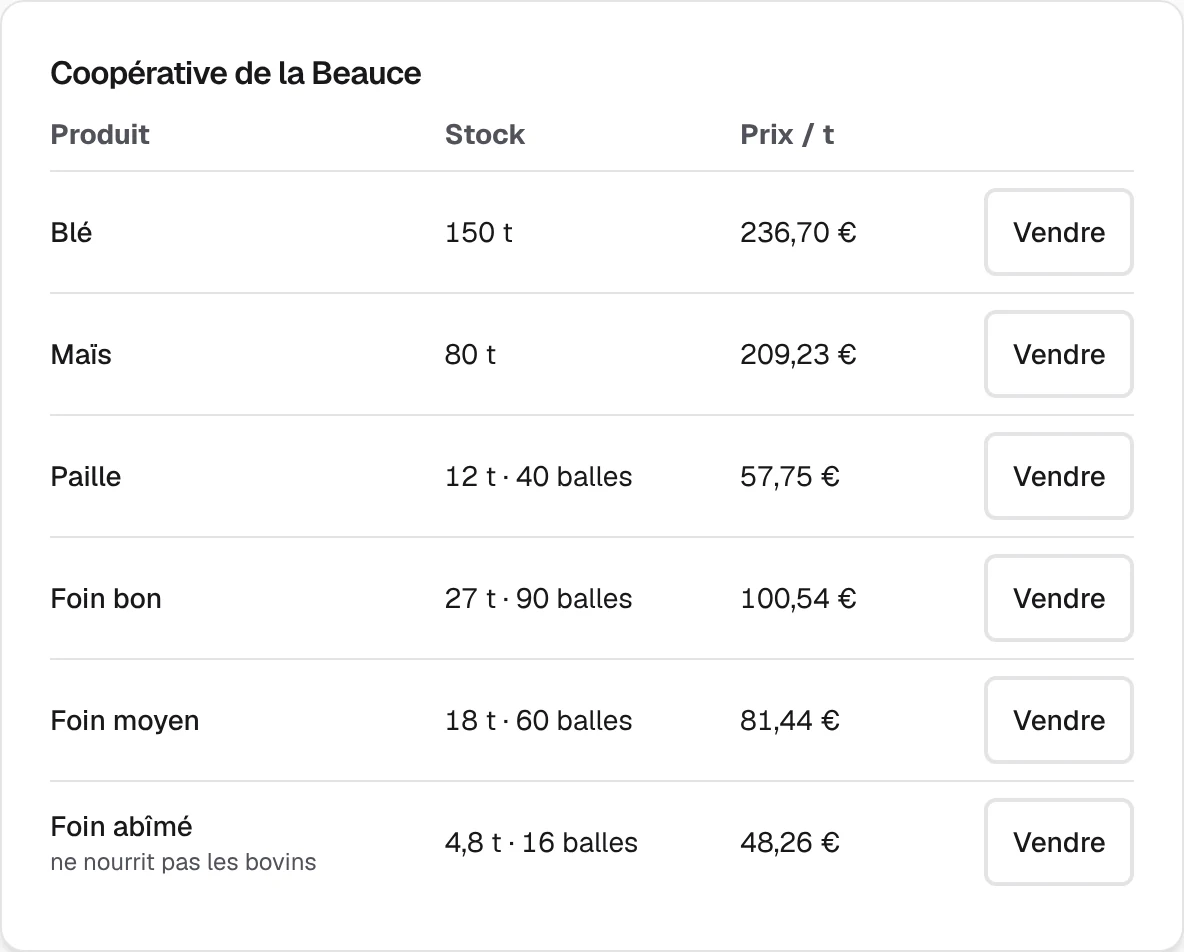
The co-op buys all three qualities, each at its own price: around €105 a tonne for the good, €85 for the average, €50 for the spoiled. The price follows the season, like that of the straw: at its lowest from July to September, when everyone has made their hay, at its highest from January to March.
After three years
A meadow more than three years old can no longer be mown: it has to be ploughed. Ploughing gives points of fertility back to the field, all the more so the longer the meadow stayed in place.
Getting started
The simplest way: sow a small field and leave everything to the contractor, mowing, tedding, baling, bale collection. The mower and the tedder are on sale at the machinery dealer, for the day your areas justify them. When the jobs follow one another, also think of the working hours of each day.
The meadow and the hay are explained in the Help panel of Fields, the Market, the Machinery dealer, My equipment and Livestock.