Player guides
From harvest to bale: straw arrives
4 min read
Until now, a harvest stopped at the grain. Not any more: wheat and barley also leave their straw, and it is up to you to decide what becomes of it. Here is how it works, from the field to the sale, in this farming management game.
A choice when the harvest starts
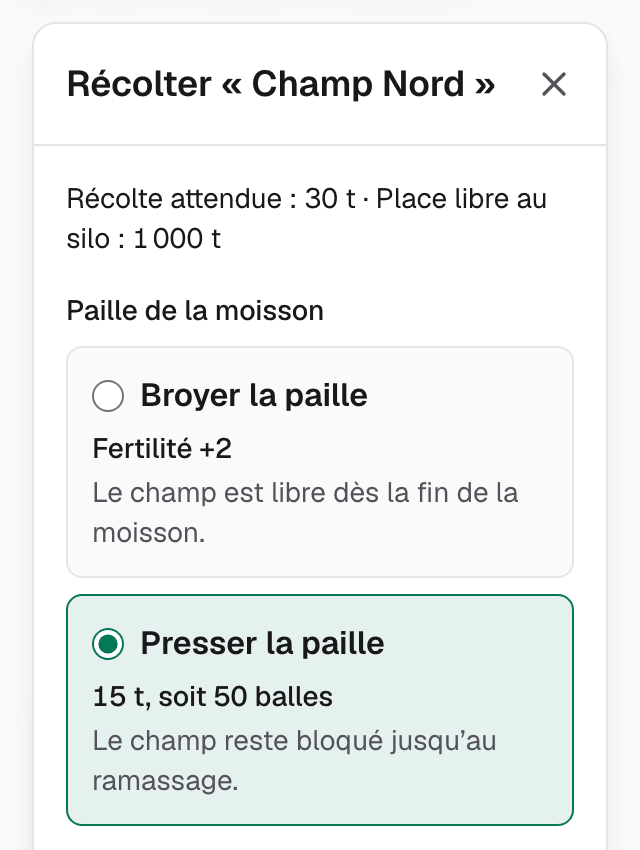
When you start the harvest of a wheat, a winter barley or a spring barley, the window asks one more question: what to do with the straw?
- Chop it. It stays on the ground and gives two points of fertility back to the field. The field is free as soon as the harvest ends. This is the choice offered by default.
- Bale it. It is left in swaths, waiting to be baled. The field stays blocked until the bales have left it: no ploughing, no sowing.
The window gives the quantity expected before you decide: half a tonne of straw per tonne of grain, in round bales of 300 kg. And once the harvest has started, there is no going back.
Baling, then collecting
Keeping the straw means accepting two more jobs before you can work the field again.
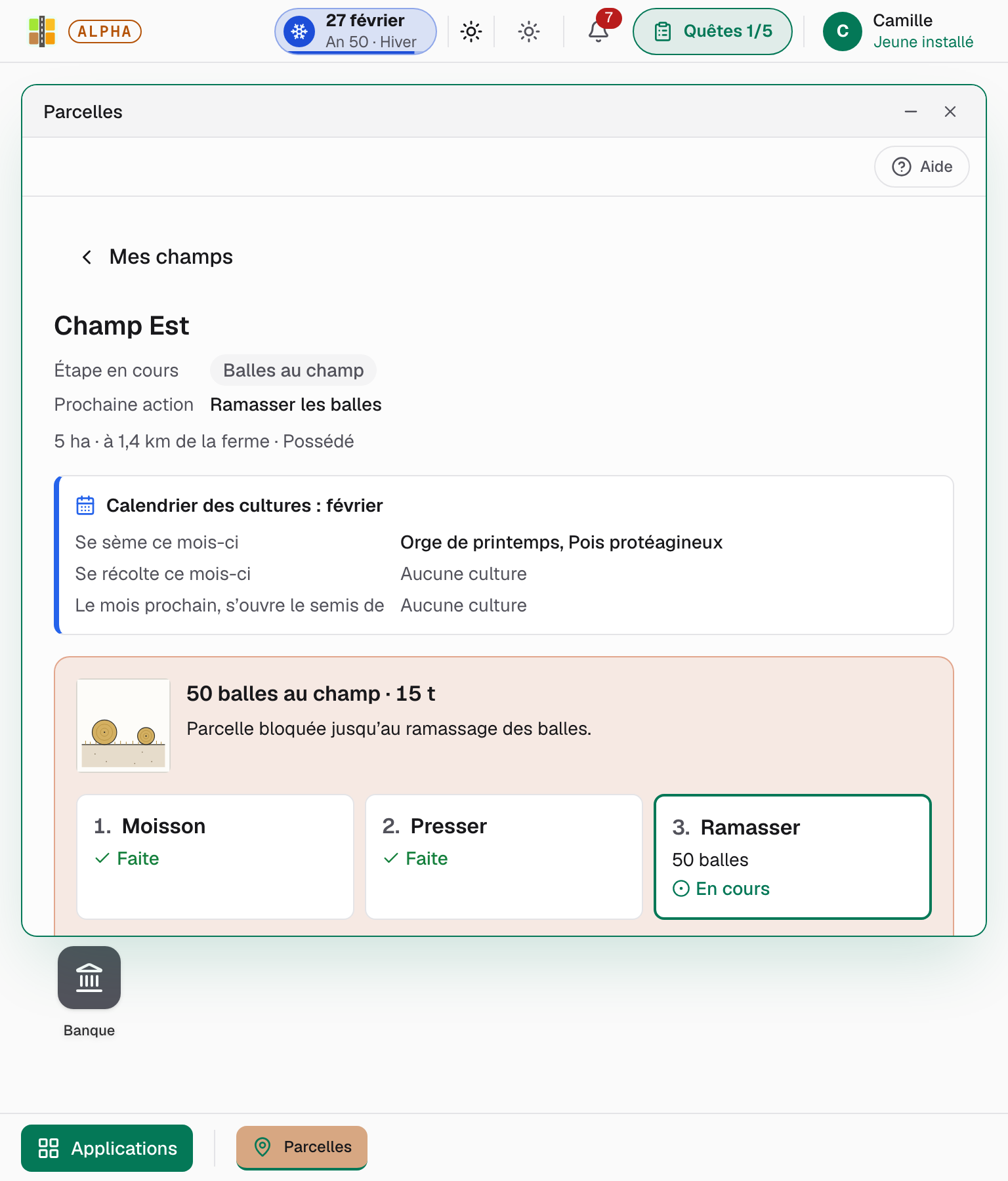
Baling turns the swaths into bales. It takes a tractor and a round baler. How long it lasts depends on the number of bales, not on the area.
Bale collection takes the bales off the field and brings them to the storage. There, it takes a whole set-up: a machine to load (a front loader mounted on the tractor, or a telehandler) and a flatbed trailer to carry. The more trips the trailer makes, the longer the job.
The page of the field follows the three steps, harvest, baling, bale collection, and reminds you what is left to do.
Without machinery: the contractor
No need to buy machinery to try. The contractor bales at €7 a bale and collects at €6 a bale. It is all or nothing: there is never any question of leaving part of the bales on the field, and he only comes to collect them if your storage can take them all.
Rain and storms stop these jobs like the others. A glance at the weather before you order avoids bad surprises: everything is explained in the weather decides.
Two ways to store
The bales collected join the fodder stock of the farm. Two buildings can shelter them, and nothing forbids having both:
- The outdoor stack yard, cheap: €10 per tonne of capacity. The bales stay outside and lose 1% of their weight every month.
- The fodder barn, dearer: €150 per tonne of capacity. Under cover, the straw loses nothing.
The fodder barn fills first. When you sell, the outdoor stack yard empties first.
Selling at the right time
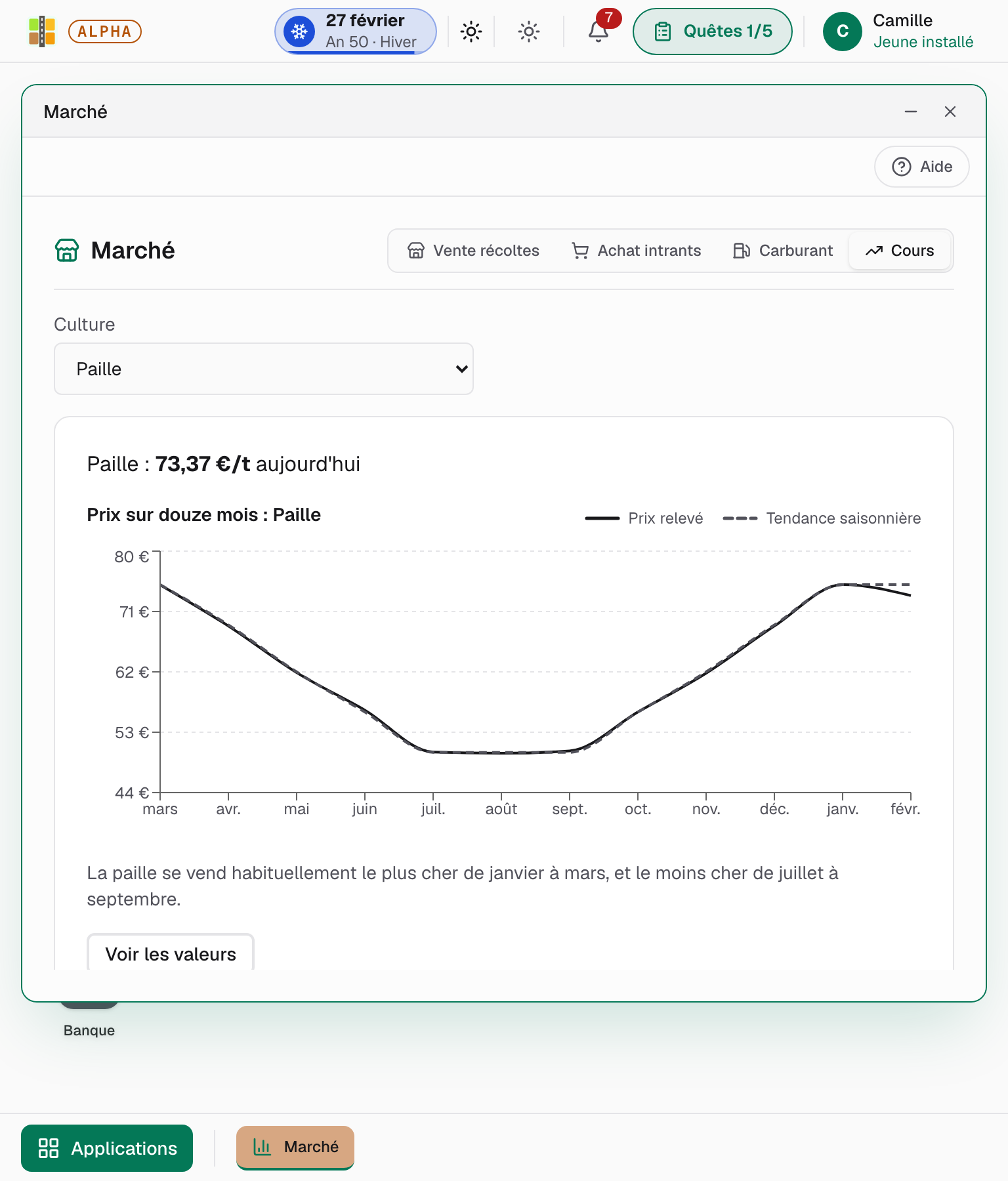
The co-op buys straw, at a price that follows the season. Around €50 a tonne from July to September, when everyone is harvesting, then up to about €75 a tonne from January to March. As for the grain, today’s price moves a little around that trend.
The price tab of the Market draws the whole year. One glance, and you know whether it is better to sell at once or wait for winter.
So, chop or bale?
Both make sense, and that is exactly what makes the choice interesting.
Chopping costs nothing and keeps up the fertility of your land, and so your yields to come. Baling brings one more sale, but it takes time, it blocks the field just when the next sowing should be prepared, and it takes organic matter away from the soil.
On a small farm, the contractor is enough to make some extra by selling in winter. The baler, the flatbed trailer and the loader are an investment that only makes sense on larger areas of cereals. Do your sums before you sign at the machinery dealer.
The sale is only a first outlet, by the way. Straw also feeds the livestock, now in the game: that is where a well-filled stock takes on its full value. For what comes next, see livestock is coming and hay is coming.
Straw is available now in the Fields, Buildings, Machinery dealer and Market apps, and each one explains it in its Help panel. New to the game? Start with what is Hectare Online?.